Pools and Open Water
Sea Swimming in the Forth
How to start sea swimming in the Firth of Forth: tides, temperatures, acclimatisation, safe entry points, kit and the habits that keep cold swims calm.
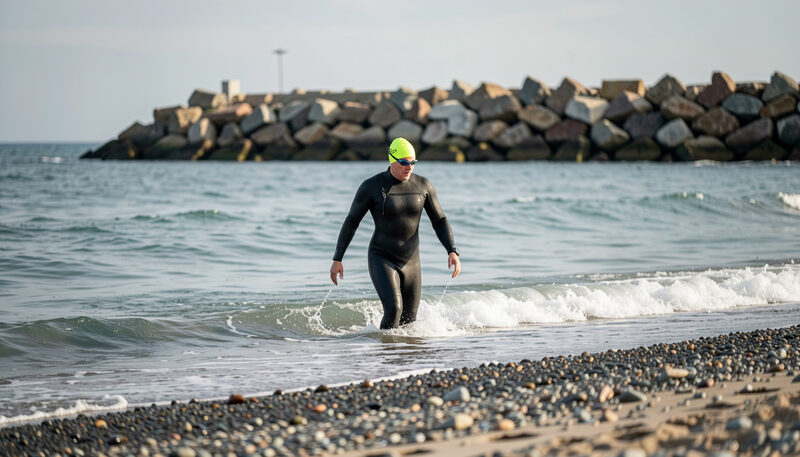
Sea swimming in the Firth of Forth is cold, tidal and often beautiful, and it is one of the fastest growing activities on the Fife coast. It is also genuinely different from swimming in a pool, and the swimmers who enjoy it most are the ones who start slowly and respect the water. This guide is for the swimmer who is comfortable in a pool and curious about the sea.
Know what you are getting into
The Forth is a large tidal estuary, not a lake. The water is cold all year, dropping to single figures in winter and rarely rising much above the mid teens in a good summer. It moves, with tides that can run strongly, and the weather changes quickly. On top of that, the coast has rocky sections, mud, and deep water close to shore in places. None of this is a reason to stay away, but all of it is a reason to prepare.
The first rule of sea swimming is never to swim alone. The second is to start in summer, in calm conditions, at a known spot, with people who have done it before.
Cold water and acclimatisation
Cold water triggers a strong physical response. The first is a gasp and a spike in heart rate, known as cold shock, which lasts a minute or two. The body then tries to cool the skin and extremities, and after a longer period the muscles and hands stop working properly. Understanding this is the key to swimming safely.
Acclimatisation is gradual. A beginner should start with short swims, perhaps a few minutes, in summer, and build up over months and seasons. The goal is not to endure the cold but to become familiar with it, so that the gasp is expected and the exit is calm. A wetsuit extends the time in the water considerably and is a sensible choice for anyone swimming outside the warmest weeks.
Reading the water before you swim
Before entering, look at the sea. Check the tide, because an outgoing tide can carry a swimmer away from the entry point and an incoming tide can cut off a beach. Check the wind, because an offshore wind makes the surface calm but can push a swimmer out. Look for rip currents, which are channels of faster water running out to sea, often visible as a break in the waves or a patch of darker, choppier water.
Choose entry points that are known and used, with an easy exit, and avoid areas near harbour walls, slipways or river mouths. Local knowledge is invaluable, which is another reason to swim with a group.
Kit that helps
The essentials for cold water are a swimming costume or wetsuit, a bright swim hat for visibility, goggles, and something warm and dry to put on the moment you leave the water. A tow float, which is a bright inflatable bag worn on a line, makes a swimmer visible to boats and can be used as a rest float. Neoprene gloves and socks keep hands and feet working for longer.
A changing robe, a flask of hot drink and a mat to stand on make the after swim far more comfortable, especially in winter. The point of the kit is not to be tough; it is to make the swim safe and repeatable.
Building a habit
The swimmers who last on the Forth are the ones who make it a routine. A regular weekend swim with the same group, at the same spot, in all weathers, builds both fitness and judgement. Winter swimming in particular is best done with company and with a strict rule about time in the water, usually measured in minutes rather than distance.
If you are moving from the pool to the sea, the safety knowledge that applies to all open water is set out in open water safety. The history of the coast's old bathing pool is told in the history of swimming in Burntisland, and the indoor pools that build the skills are listed in the guide to pools in Fife. For cold water guidance, the Royal Life Saving Society publishes safety advice at rlss.org.uk.
Where to swim on the Fife coast
The Fife coast has a number of recognised sea swimming spots, from the sandy beaches of the east to the harbours and rocky shores further west. Each has its own character: some are sheltered and shallow, others are exposed to the swell and have deep water close in. The safest approach for a newcomer is to join an established group at a known spot and learn the local conditions from people who swim there regularly.
Harbour walls, slipways and river mouths are best avoided, as are areas with boat traffic. A swimmer who knows the tide, the exit and the hazards of one beach will enjoy it far more than one who tries a different spot every week.
Winter swimming
Winter swimming on the Forth is popular, and it is a different discipline from summer swimming. The water is cold enough to shorten a swim to a few minutes, and the focus shifts from distance to the experience of the cold and the warmth afterwards. The rules are strict for good reason: go with others, keep the swim short, get dressed quickly, warm up gradually, and never swim alone in the cold.
Done sensibly, winter swimming is one of the most rewarding habits on this coast. Done carelessly, it is one of the most dangerous. The safety detail is in open water safety.