Learn to Swim
Learn to Swim
How children and adults learn to swim in Fife: water confidence, stroke basics, lesson formats, pool etiquette and what steady progress really looks like.
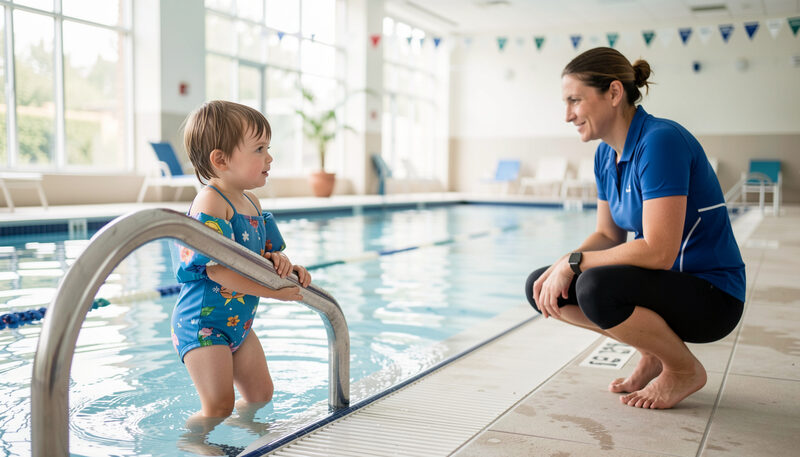
Learning to swim is one of the few skills that can be started at almost any age and kept for life. In Fife, that journey usually begins in a local authority pool and, for many families, ends up on the coast: the same water that fills the Beacon Leisure Centre in Burntisland is the Forth that runs along the town's shore. This section of the magazine looks at how that journey works, what to expect at each stage, and what actually helps a swimmer of any age move forward.
What learning to swim really involves
Swimming is not one skill but a small set of them, and they arrive in a rough order. The first is comfort in the water: being able to put a face in, breathe out, and stand up again without panic. The second is floating and gliding, which teaches a swimmer that the water will hold them. Only then do the strokes make sense, because a stroke is what a swimmer does once they trust the water to carry them between breaths.
Programmes such as the national Learn to Swim framework used by Scottish clubs and pools follow that order deliberately. Children are usually grouped by ability rather than age, and they move up when both their confidence and their technique improve, not when a term ends. That is why two children who start on the same day can be in different groups a year later, and why that is normal.
Children and adults learn differently, but not as much as people think
Children often learn through play and repetition, and they are usually less worried about looking foolish. Adults tend to arrive with more strength and more understanding, but also with more fear, often from a bad experience years earlier. The useful thing for both is the same: short, regular sessions in shallow water where the swimmer can always stand up, and a teacher who breaks each skill into steps small enough to succeed at.
For a child, the biggest single factor is simply time in the water between lessons. A weekly lesson helps, but a family swim on a Saturday, even a short one, is what turns a lesson into a habit. You can read more about the child's side of this in teaching a child to swim.
What a good lesson looks like
A well run lesson has a clear plan, a warm pool, and a teacher who is in the water or close to it. It should include a warm up, a main focus for the day, and a short game or challenge at the end so that the swimmer leaves wanting to come back. Small groups matter more than fancy facilities: a swimmer who gets individual attention for a few minutes each week will progress faster than one who spends the lesson queuing at the wall.
Parents watching from the gallery can help by staying relaxed. A child reads a parent's face quickly, and a worried parent on the balcony can undo a confident teacher in the water. The best thing a parent can do is praise effort, not results, and save the coaching for the teacher.
The four strokes come later than people expect
Many parents ask when their child will learn front crawl. The honest answer is that the strokes are the last part of the foundation, not the first. A swimmer needs to be able to float, breathe out under water, and recover to a standing position before a stroke is useful. Once those are in place, the strokes can be built one at a time. The four competitive strokes and what each one demands are set out in the guide to swimming strokes.
Progress is not a straight line
Every swimmer has plateaus, and every swimmer has a growth spurt that seems to undo months of work. A child who was comfortable in the water at seven can become cautious at nine, and an adult who swam as a child can find the water strange after twenty years away. None of this is failure. It is the normal shape of learning a physical skill, and it usually resolves with patience and regular, unhurried time in the water.
It also helps to know where the journey is heading. For families who want to go further than lessons, the Scottish club system offers a clear route from a first group through to competitive squads, described in the club pathway.
Where to swim in Fife
Most learners start in a public pool run by the local leisure trust. Fife has a network of these, from the Beacon Leisure Centre in Burntisland to the Michael Woods Sports and Leisure Centre in Glenrothes, and the practical detail of sessions, travel and what to bring is gathered in the guide to pools in Fife. For adults who want to keep going after lessons, the coast offers a very different and very rewarding kind of swimming, covered in sea swimming in the Forth.
What to do next
If you are starting from scratch, the simplest plan is to book a block of lessons, add one family swim a week, and give it a full year before judging progress. If you are returning to swimming as an adult, a few private lessons to rebuild technique will save you months of frustrated lengths. And if you are choosing a pool or a club, ask about group sizes, teacher qualifications and how swimmers are moved between groups, because those three answers tell you more than any brochure. The about page explains how this magazine covers the subject and where to write with a correction.
A note on safety
Nothing in this section replaces qualified instruction or the rules of a particular pool. Cold water, in particular, behaves differently from a heated pool, and the safety basics for the sea and for open water are set out separately in open water safety. Learn in a supervised pool, then extend to the coast with the right preparation.
Learn to Swim
Teaching a Child to Swim
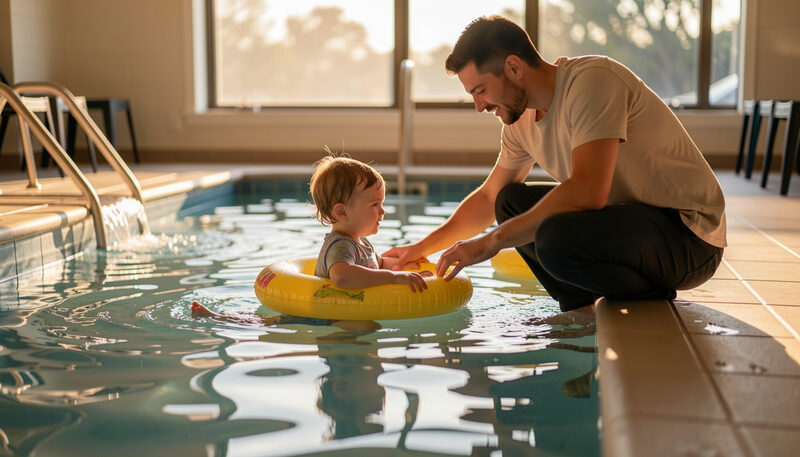
A calm, step by step way to teach a child to swim: water confidence, floats, breathing, first strokes, and when formal lessons help most.
Confidence first, strokes much later.
Learn to Swim
The Four Swimming Strokes
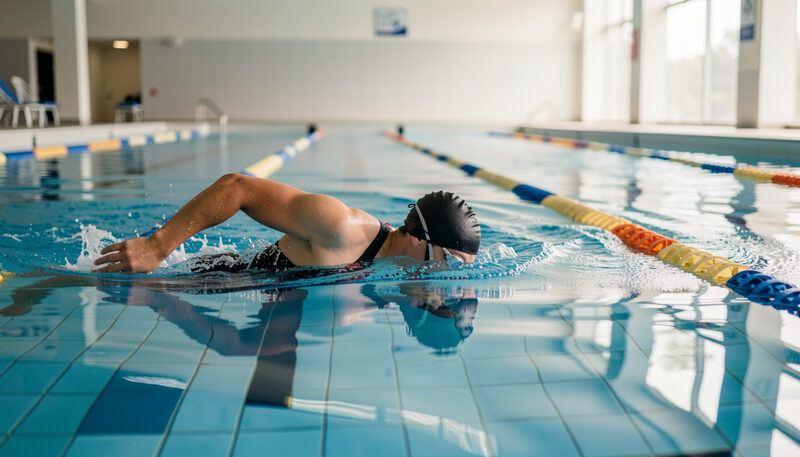
Front crawl, backstroke, breaststroke and butterfly explained: body position, breathing, common faults and how each stroke is used in a pool or the sea.
Four strokes, four problems, four solutions.