Clubs and Competition
The Club Pathway in Scotland
From learn to swim to district squads: how the Scottish club pathway works, what each squad trains for, and how swimmers move up through the levels.
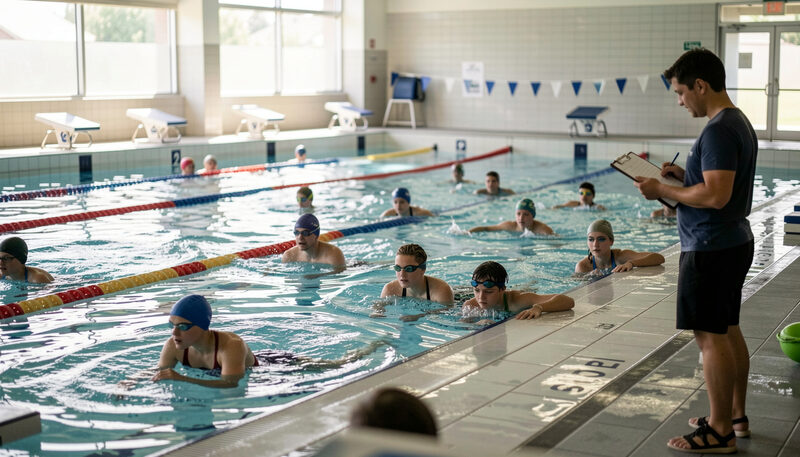
A swimmer who joins a Scottish club enters a pathway with several levels, each with its own training pattern and its own purpose. The names of the levels differ from club to club, but the shape is broadly the same across Fife and the rest of the country. This guide explains that shape so that parents and swimmers can see where they are and what comes next, without treating the pathway as a race.
The starting point: lessons and the first group
Most swimmers arrive at a club after a period of lessons, able to swim a short distance unaided and safe in the water. The first club group is usually a teaching or development group. The focus is technical: breathing, body position, the four strokes, and the skills of diving, turning and streamlining. Sessions are short and often once or twice a week, and the aim is to build a solid foundation rather than fitness.
This stage can last a year or several, and there is no rush. A swimmer who builds good habits here will progress faster later than one who is pushed into hard training too soon.
The development squad
The next level is usually a development squad. Training increases to two or three sessions a week, and the swimmer begins to work on stamina alongside technique. This is where swimmers learn to use a pace clock, to follow a written set, and to manage their own effort over a session. Racing skills such as starts and turns are refined, and the swimmer may enter their first licensed galas.
At this stage, qualifying times begin to matter. A swimmer aiming for district events will be working towards the standards set for their age group, which is why reading times accurately becomes useful. The basics are covered in reading swim times.
District and performance squads
Above development, clubs usually have one or more performance squads. Training rises to four or more sessions a week, sometimes with land training, and the focus shifts towards competition and long term development. Swimmers in these squads are often working towards district qualifying times and, for the strongest, national standards. The commitment required is significant, for the swimmer and for the family that drives them to the pool.
Not every swimmer wants this level, and that is fine. A club pathway is not a ladder that everyone must climb. Plenty of swimmers stay in development groups for years, enjoying the sport, and that is a good outcome in itself.
How swimmers move between squads
Movement between squads is decided by coaches, based on ability, attitude and commitment. It is not automatic and it is not purely about times. A swimmer may be ready technically before they are ready physically, or the reverse. Coaches also consider whether a swimmer will thrive in a harder group, because being the slowest in a squad can be motivating or crushing depending on the person.
Parents can help by trusting the coach's judgement and by asking questions calmly rather than comparing their child with others. If a swimmer is stuck for a long time, a direct conversation with the coach is more useful than a complaint in the car park.
The wider pathway beyond the club
Beyond the club, the pathway continues into district and national squads and programmes run by the governing body. These are selective and few swimmers reach them, but they exist as a route for those who do. For most swimmers, the club is the whole of their swimming life, and that is more than enough. The national governing body describes its own pathway and programmes at scottishswimming.com.
Adults on the pathway
The pathway is not only for children. Adults who swim for fitness or who want to compete can join masters squads, which offer structured training and their own competitions. This is described in the guide to masters swimming.
What parents should watch for
The main risk in a competitive pathway is burnout. A swimmer who trains hard, races often and never rests can lose their love of the water by their mid teens. The signs are easy to miss: a drop in enthusiasm, a reluctance to go to training, a swimmer who stops enjoying the pool. A good club manages training load and keeps the sport enjoyable. A parent who notices the signs early can talk to the coach and adjust, and the swimmer is far more likely to stay in the water for life.
The club world sits on top of the learn to swim journey, covered in the learn to swim section, and its competitions are explained in how a swimming gala works. The pools where it all happens are listed in the guide to pools in Fife.
What commitment looks like
Each step up the pathway asks for more time, and it is worth being realistic about what that means. A development swimmer might train two or three evenings a week; a performance swimmer might train five or six mornings and evenings, plus land work. For a family, that is a serious commitment of time and travel, and it is reasonable to weigh it before agreeing to a move up.
There is no shame in staying at a level that fits. A swimmer who trains twice a week and enjoys it for years is a better advertisement for the sport than one who burns out at fifteen. The pathway exists to be used at the pace that suits the swimmer, not to be raced through.